


In this day and age, having a solid Social Media Strategy for Business Growth. But honestly, are your actions on Instagram, Facebook, LinkedIn, or TikTok really making a difference for your bottom line? Are you simply racking up likes, or actually driving sales?
Numerous companies get caught up in posting for posting’s sake, basking in ego metrics when their revenue is flat. This is not only a waste of time, it’s an opportunity that’s being missed. Your social media should be lead generation and customer acquisition powerhouses, and ultimately, drivers of higher revenue.
This isn’t a matter of spewing money at ads or following temporary trends. This is an issue of a repeatable, strategic process. We’re going to deconstruct a proven Top Social Media Strategy for Business Growth.
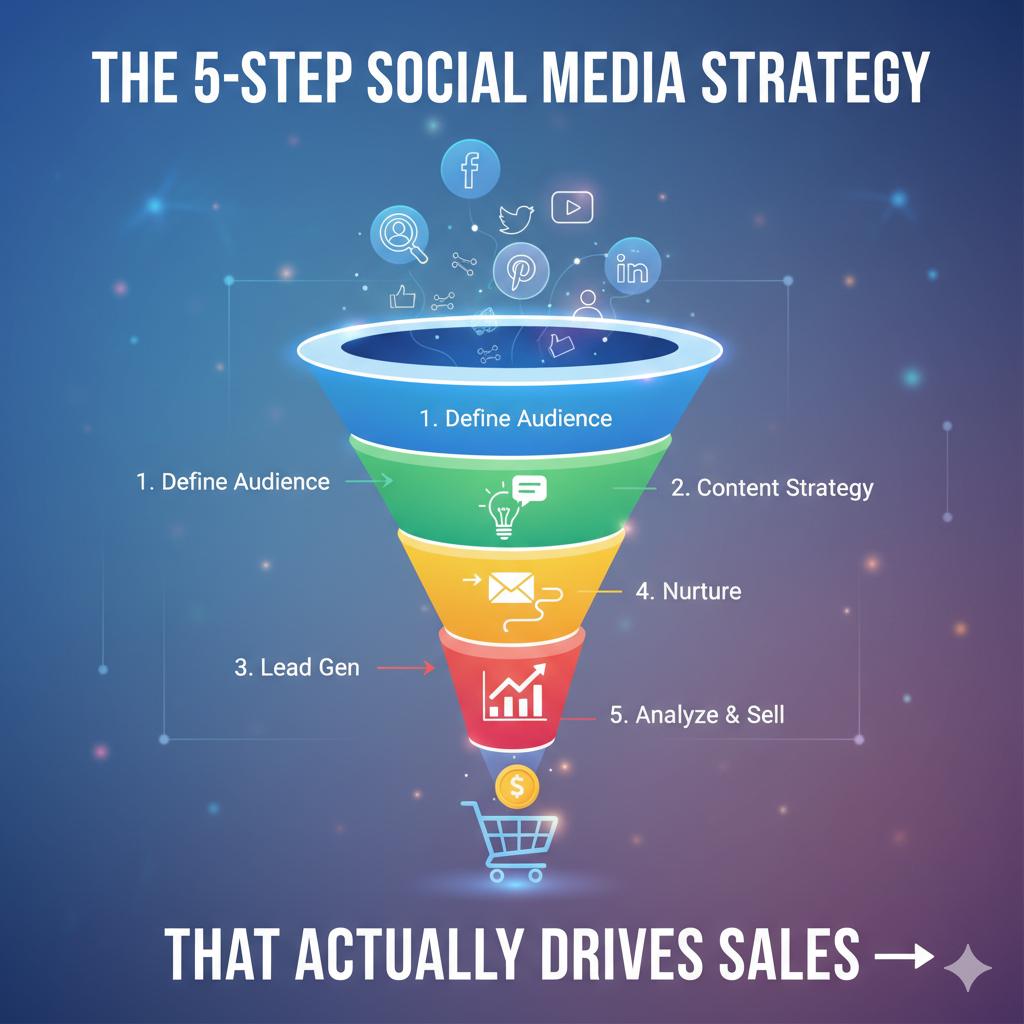
Step 1: Define Your Ideal Client & Map Their Journey
Before you post a single bit of content, you need to have a clear idea of who you’re addressing. This is where most strategies break down. Generic content interests nobody.
Who is your dream client? Move beyond demographics. What are their issues? What are their hopes? What needs do they have that your product or service has to fill? Identify your dream client with specificity. Assign them a name, occupation, and daily schedule.
Where do they hang out online? Don’t try to be everywhere. If your ideal client spends all their time on LinkedIn for professional development, a heavy investment in TikTok might be misplaced. Focus your efforts where they are most active.
Map out their customer journey: How do they usually come across solutions like yours? What do they need at each point? From awareness (recognizing a problem) through consideration (searching for solutions) to decision (buying), get to know their journey. It’s not about being present; it’s about being present with the correct message at the correct time. This initial work has a direct influence on your capacity to convert followers into customers.
Step 2: Develop a Sales-Driven Content Strategy
Now that you understand your audience and how they move, you can design content to convert. Your social media content is not only for fun; Social Media Strategy for Business Growth means to navigate your ideal client down the path to paying customer.
Educational Content: Answer questions, share insights, and solve problems relevant to your space. This establishes trust and makes you an expert. Consider “How-to guides,” “Top 5 tips,” or “Explainer videos.”
Engaging Content: Prompt discussions, pose questions, and invite interaction. This creates community and keeps your brand in front of your audience. Polls, quizzes, and behind-the-scenes stories are amazing.
Promotional Content (with a twist): When promoting, indicate how your product resolves their particular pain area. Instead of “Buy our product,” use “Having trouble with X? See how our solution Y gets you to Z.” Highlight testimonials, case studies, and before-and-after situations.
Content Pillars: Structure your content into 3-5 central themes that resonate with your customer and align with your products. This helps maintain consistency and relevance.
Keep in mind that all content, even non-promotional content, needs to subtly bring your audience closer to thinking about your solution.
Step 3: Execute Strategic Lead Generation Strategies
Posting isn’t sufficient; you must have methods to collect interest. This is where you actually create leads out of your social media efforts.
Lead Magnets: Provide something of value in exchange for an email address. This can be an e-book, a webinar, a template, a free consultation, or a discount code. Promote these aggressively across your channels.
High-Converting CTAs (Calls to Action): Avoid making your audience figure out what to do next. All pieces of sales-focused content should have a clear, compelling CTA.
“Download our free guide to X”
“Sign up for our masterclass on Y”
“Book a free strategy session”
“Shop the collection”
“Learn more about how we can help”
Dedicated Landing Pages: When a user clicks your CTA, direct them to a dedicated landing page that only exists to capture their information or take one specific action. Kill distractions.
Direct Messaging (DM) Strategy: For some businesses, particularly B2B or high-ticket B2C, DMs can be amazingly effective for one-on-one lead nurturing. Don’t spam; provide real assistance.
The objective here is to get interested social media users off of the platform and into your own environment (such as your email list) where you have better control over the sales process.
Step 4: Nurture Leads & Lead Them Through the Sales Funnel
It takes more than getting a lead to close a sale. The actual magic occurs during the nurturing process. Your social strategy must complement your overall conversion funnel.
Email Marketing Integration: After you collect an email address (Step 3), an automatic email sequence can teach, establish trust, and overcome objections. This brings prospects to a purchase.
Retargeting Ads: Utilize social media ads to retarget those who have interacted with your content, visited your site, or engaged with your lead magnet but are not yet buyers. Display to them relevant ads that keep them aware of your value proposition.
Community Building: Set up private groups (e.g., Facebook groups, LinkedIn groups) in which you can offer special content, create discussion, and provide direct assistance. This generates loyalty and trust, which simplifies future sales.
Consistent Value: Even for non-immediate converters, keep delivering value on your public social channels. Remain top-of-mind, and when they are ready to purchase, you are their go-to. This consistent visibility increases revenue over time by keeping your brand relevant.
Step 5: Analyze, Optimize & Scale Your Social Media ROI
The last, and most important, component of any effective strategy is measurement. You must measure success in order to actually know your social media ROI.
Monitor Key Metrics: Look beyond likes and shares. Look at metrics that have a direct correlation to sales: website clicks, lead magnet downloads, email sign-ups, conversion from social to sale, and actual revenue driven from social channels.
Use Analytics Tools: Take advantage of the analytics built into each social network, Google Analytics (to view traffic and conversions from social), and any CRM or marketing automation tool you’re using.
A/B Testing: Test various types of content, CTAs, ad creative, and lead magnets. Check out what works best with your audience and leads to the most conversions.
Regular Review: Establish a schedule (monthly or quarterly) for reviewing your performance. What’s working? What’s not? Where are the opportunities to improve?
Optimize & Scale: With your findings, hone your content approach, tweak your lead generation strategy, and put more resources behind what’s working best. This round of iteration is how you keep monitoring sales and optimizing your returns.
Conclusion: From Social Presence to Sales Powerhouse
Social media is no longer a branding exercise; it’s an essential part of your sales stack. By carefully identifying your ideal client, writing content that converts, using strong lead generation strategies, converting those leads through your conversion funnel, and stringently measuring success, you can turn your social media efforts into sales-driving machines.
Stop aimlessly posting. Begin using this 5-step Social Media Strategy for Business Growth and see your social channels transform from a time waster into a highly effective engine that actually generates sales. Your bottom line will thank you.